

AI Usage in Indonesia: What the Data Reveals About Adoption, Usage Patterns, and Integration Readiness
06 Jan, 2026
- 21,073 views


2016 - 2026 Copyright @ Graphie.
All Rights Reserved
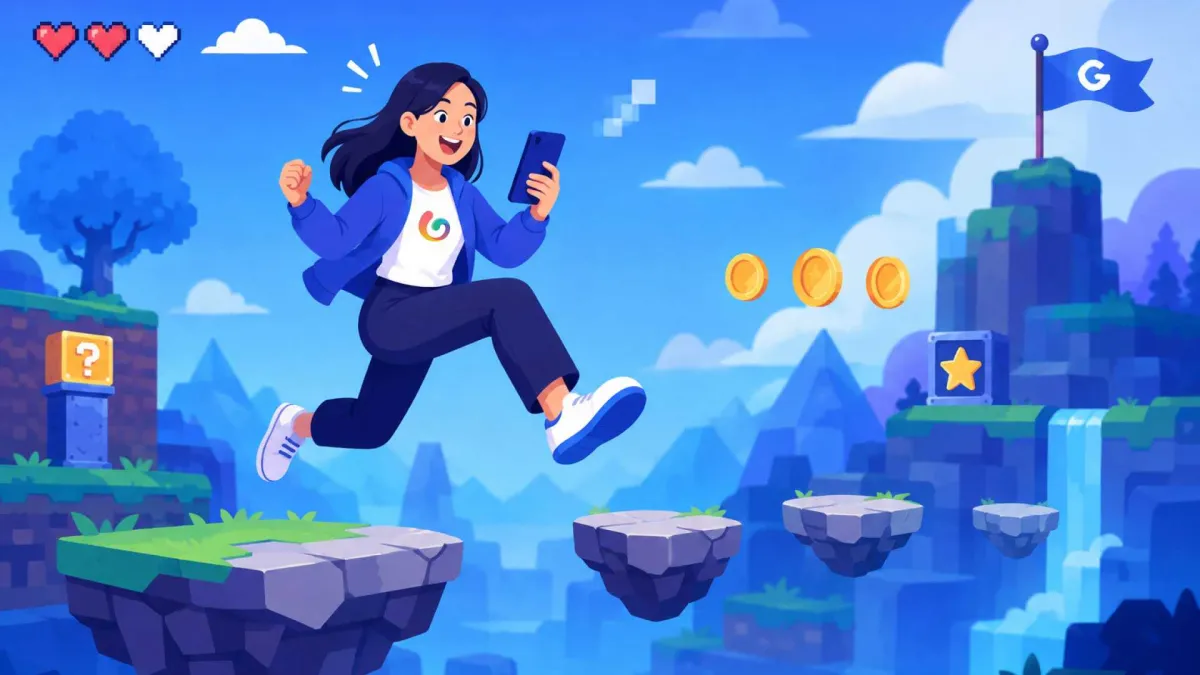
What if employee training felt like completing a mission instead of attending a mandatory session? What if a loyalty program felt more like progressing through a game than collecting points? What if onboarding a new customer felt like unlocking a journey rather than filling out forms?
Gamification gives businesses the opportunity to rethink these everyday experiences. The idea is not to turn everything into a game, but to borrow the psychology behind games and use it to make digital experiences more engaging, rewarding, and memorable.
The most interesting gamification ideas often come from looking at ordinary business problems differently. Instead of asking how to make people participate, we can ask what would make them curious enough to participate voluntarily. Instead of asking how to make employees complete training, we can ask what would make them want to discover what comes next.
Here are some creative ways businesses can use gamification beyond the usual points, badges, and leaderboards.
Imagine employees don't simply receive a training module. They receive a mission.
Instead of opening a presentation called “Company Culture Training,” employees enter a story where they become part of a fictional team facing a series of challenges. Each challenge introduces a company value, business scenario, or decision that they need to solve. Their progress unlocks the next chapter, creating the feeling that they are moving through an experience rather than completing mandatory training.
The important part is that the game mechanics support the learning objective. The objective is not to make training entertaining for the sake of entertainment, but to create stronger emotional involvement with the material.
What if every employee had a digital passport that represented their journey inside the organization?
The passport could contain achievements, completed training, certifications, participation in company activities, project milestones, and other meaningful accomplishments. Employees could gradually build their profile as they progress through their career.
This could turn something that is normally hidden inside HR systems into something employees can actually see and feel. Instead of simply knowing that they have worked at a company for three years, they can see the journey they have completed during those three years.
The first few days at a company can be overwhelming. New employees have to learn systems, people, processes, policies, products, and culture, often while trying to remember everyone's name.
Gamification can turn onboarding into a progressive journey. Completing one step unlocks another. Meeting a specific team member can become a mission. Learning an important company value can unlock a story. Completing essential setup tasks can move the employee to the next stage.
Instead of presenting new employees with a long checklist, the company creates a sense of discovery.
Not every employee needs the same learning experience. A creative gamification approach can turn training into a branching story where users make decisions and experience different outcomes.
For example, imagine a customer service simulation where an employee has to deal with an angry customer. They are given several possible responses. Each decision leads to a different consequence, and the employee can see how their choices affect the outcome.
This creates a safe environment for practicing difficult situations without the real-world consequences of getting them wrong.
Sometimes the easiest way to increase participation is to create a shared objective.
Imagine launching a monthly company challenge where different teams compete to complete a series of activities. The challenge could involve learning, innovation, wellness, customer service, knowledge sharing, or even social initiatives.
The interesting part is that the challenge does not necessarily have to reward the highest individual performer. It could reward collaboration, consistency, improvement, or collective achievement.
This makes gamification less about “who wins?” and more about “what can we accomplish together?”
Many businesses struggle to explain complex products. Customers receive brochures, tutorials, videos, and documentation, but still don't understand what the product can actually do.
Instead of explaining every feature upfront, a company could create a product discovery experience. Users are given challenges that require them to discover different features naturally.
For example, instead of telling users that an application has ten powerful features, the platform could challenge them to complete ten tasks, each requiring a different feature.
The product teaches itself through interaction.
Loyalty programs do not always have to be about points.
A brand could introduce customer levels based on meaningful interactions. Customers might start as a newcomer and gradually progress through different stages as they interact with the brand.
The levels could unlock experiences rather than simply discounts. Early access, exclusive content, personalized recommendations, special challenges, or community access can all become part of the journey.
The psychological difference is important. Customers are no longer simply accumulating points. They are building a relationship with the brand.
Streak mechanics are powerful because they transform occasional behavior into a habit.
A company could create a daily learning challenge where employees or customers receive a small activity each day. The activity could take only a few minutes, making it easy to complete.
The goal is not to create pressure, but consistency. A five-minute interaction every day can sometimes be more effective than asking someone to complete a two-hour training session once a month.
The key is to make the daily activity genuinely valuable. A streak should reward meaningful behavior, not simply create another notification.
Corporate knowledge does not always have to live inside documents.
A company could create an interactive quiz show where employees compete individually or in teams. Questions can range from company history and products to policies, industry knowledge, or fun facts about colleagues.
The format can be especially useful during company events, town halls, onboarding sessions, or internal campaigns.
Suddenly, knowledge that normally sits inside a PDF becomes something people actively interact with.
One of the strongest drivers of engagement is curiosity.
Instead of revealing everything at the beginning, a campaign can gradually reveal information as users complete challenges. Each completed activity unlocks another piece of the story.
This could work particularly well for product launches, internal campaigns, brand activations, and events.
The audience keeps participating because they want to know what happens next.
Traditional leaderboards often reward the people who are already at the top. That can be motivating for high performers but discouraging for everyone else.
A more inclusive gamification system could recognize improvement.
Someone who increases their score by 30% could receive an achievement even if they are nowhere near first place. Someone who completes a challenge faster than their previous attempt could receive recognition. Someone who consistently participates could receive a different type of reward.
This creates a healthier motivation system because success is no longer defined by being number one.
Conferences, exhibitions, corporate events, and brand activations often have the same problem: people attend, walk around, take a few photos, and leave.
Gamification can transform the event into a journey.
Visitors can receive missions, scan locations, complete challenges, collect digital achievements, answer questions, and unlock rewards. Sponsors can create interactive challenges around their booths. Attendees can collect digital memories throughout the event.
Instead of simply attending an event, people become participants.
Treasure hunts are one of the oldest forms of gamification, but digital technology makes them much more flexible.
A business can hide clues across an application, website, physical location, social media channels, or even different pieces of content. Users need to connect the clues to discover the final answer.
This can create an experience that encourages people to explore parts of a product or brand that they might normally ignore.
The best treasure hunts do not feel like advertising. They feel like discovery.
One of the most interesting directions for gamification is personalization.
Instead of giving every user the same experience, the system can create a journey based on what they do. Their choices determine which content, challenges, rewards, or stories they see next.
Imagine an educational platform where the user's decisions gradually shape their digital character. Or a brand experience where customers unlock different journeys depending on their interests.
The user is no longer simply following a predefined path.
They are creating their own.
Behind every successful gamification experience should be meaningful data.
A real-time dashboard can show more than scores. It can reveal participation rates, most popular challenges, completion rates, average session duration, quiz accuracy, returning users, device usage, team performance, and other behavioral patterns.
For management, this turns gamification into more than an engagement program. It becomes a source of business intelligence.
The real value comes when the company uses these insights to improve the experience continuously. If users consistently abandon one challenge, perhaps the challenge needs to change. If one activity is extremely popular, perhaps the mechanic can be expanded. If one topic generates unusually low scores, perhaps the content needs to be redesigned.
The data makes the gamification experience smarter over time. The Best Gamification Ideas Don't Start With Games The most important lesson is that great gamification does not start with a game mechanic. It starts with a problem.
Maybe employees are not completing training. Maybe customers are not returning. Maybe users don't understand a product. Maybe an event feels passive. Maybe a marketing campaign struggles to generate participation. Maybe a company wants people to adopt a new behavior.
Konsultasi GRATIS tanpa Komitmen, dan temukan strategi terbaik untuk bisnis Anda.
CHAT SEKARANGOnce the problem is clear, gamification becomes a design tool for creating a better experience. Points may be useful. Badges may be useful. Leaderboards may be useful. Streaks, missions, levels, challenges, stories, rewards, and achievements may all be useful too. But none of them should exist simply because they look like game mechanics.
The real question is always the same: What would make people want to do this? That question changes everything. Because the future of gamification is not about making business feel more like a game. It is about making business experiences feel more engaging, meaningful, rewarding, and human. And when that happens, gamification stops being a gimmick. It becomes a powerful way to change behavior.



Recommended for you
AI Usage in Indonesia: What the Data Reveals About Adoption, Usage Patterns, and Integration Readiness
The Best Power-Ups and Boosters in Ducky Pop: When and How to Use Them
The Hydrogen Fuel Frontier: Aryanto Misel's Nikuba Tech Shakes the World
The Psychology Behind Match-3 Games: Why Ducky Pop is So Addictive
Feeding the Future: Tackling Global Food Security with AI Agriculture
Ducky Pop: A Splash in the Match-3 Pool
From Idea to Launch: A Step-by-Step Guide to Building Your Dream Startup
The Digital Revolution: How Mobile Apps Have Transformed Our Daily Lives
Unlock the Hidden Worlds: Exploring the Different Themes and Levels in Ducky Pop
Tonework: The Future of Personalized Beauty is Here
Typography Tips That Wow: How to Use Fonts Like a Pro
Ducky Pop: A Splash in the Match-3 Pool
The Future of Website Design: AI-Driven Tools Transforming User Experience
The Power of Data Analytics: How to Drive Growth with Informed Decisions
From Zero to Branded Hero: How Print-on-Demand Empowers Small Businesses