

AI Usage in Indonesia: What the Data Reveals About Adoption, Usage Patterns, and Integration Readiness
06 Jan, 2026
- 17,160 views




2016 - 2026 Copyright @ Graphie.
All Rights Reserved
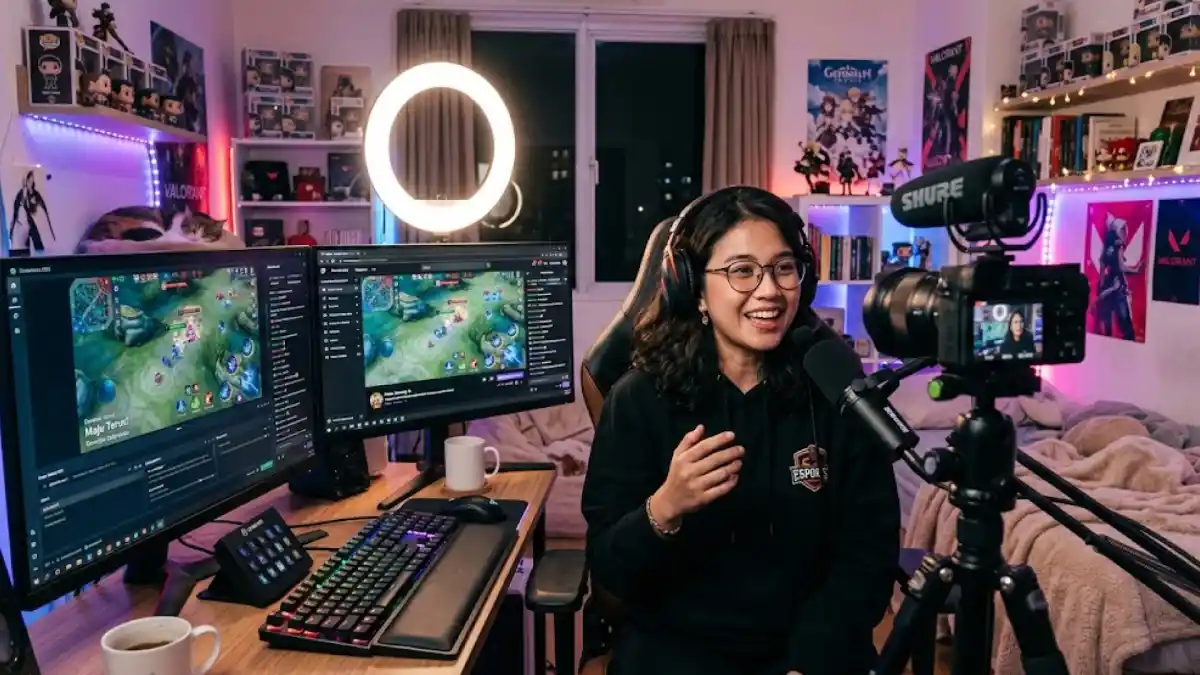
Behind millions of homes across Indonesia, an economic transformation is quietly taking place. There are no storefronts, office towers, or prominent business signs. Yet inside bedrooms, living rooms, garages, kitchens, and small home offices, people are selling products, creating content, managing online stores, designing for clients, producing digital services, and building businesses. This is the hidden economy—economic activity that may not look like conventional business but is increasingly becoming part of Indonesia’s digital economy.
Konsultasi GRATIS tanpa Komitmen, dan temukan strategi terbaik untuk bisnis Anda.
CHAT SEKARANGFor decades, businesses were associated with physical locations. A business usually had a shop, office, workshop, factory, warehouse, or other identifiable commercial space.
Digitalization has changed that definition.
A bedroom can become a content studio. A garage can become an e-commerce warehouse. A dining table can become a freelancer’s workstation. A smartphone can become a sales counter, customer service desk, marketing channel, and payment terminal—all at once.
The physical location of a business is becoming less important than its access to technology, platforms, skills, and customers.
The phenomenon becomes particularly interesting as Indonesia enters its 2026 Economic Census. Statistics Indonesia (BPS) has highlighted hidden economy activities, including economic activities conducted from homes that do not necessarily resemble conventional businesses.
In the context of the digital economy, this can include content creators, affiliates, animators, freelancers, online sellers, and other platform-based economic activities.
They may not have employees, offices, or physical stores. But they can still generate income, serve customers, create jobs, and contribute economic value.
The absence of a storefront does not mean the absence of a business.
One of the clearest examples is the rise of homes as creative production spaces.
A content creator no longer needs a television studio to produce videos. A graphic designer does not necessarily need an office to work with corporate clients. An animator can work on international projects from a laptop. A freelancer can serve customers in another city—or another country—without ever meeting them physically.
Technology has removed part of the traditional relationship between location and economic opportunity.
In the traditional economy, location could determine access to customers. In the digital economy, a stable internet connection and the right platform can potentially connect someone sitting in a small Indonesian town with customers thousands of kilometers away.
The same transformation is happening in retail.
A house can become the operating center of a small online business. One room stores inventory. The garage becomes a packing area. The living room becomes a product photography studio. A smartphone manages orders and customer conversations.
There is no need to rent a shop in a shopping center to reach customers across the country.
Marketplaces and social commerce platforms have dramatically lowered the barriers to entering retail.
But there is a paradox.
The easier it becomes to enter the digital marketplace, the harder it can become to stand out.
More sellers mean more competition. Prices become increasingly transparent. Advertising becomes more important. Margins can become thinner. And sellers may become highly dependent on platform algorithms, fees, policies, and visibility.
Going digital can create opportunity—but it does not automatically create a healthy business.
Digitalization has also created a new type of business: the one-person company.
One individual can simultaneously become:
Owner + marketer + customer service + salesperson + content creator + accountant + operator.
Software and digital platforms increasingly allow one person to perform tasks that once required several departments.
Marketplaces handle transactions. Payment platforms process payments. Social media provides distribution. Cloud services store documents. Accounting software manages financial records. Communication platforms connect businesses with customers.
As a result, the traditional boundaries between employee, freelancer, entrepreneur, and company are becoming increasingly blurred.
A traditional office requires desks, computers, telephones, networks, and physical infrastructure.
A digital micro-business may begin with something much simpler: a smartphone.
A single device can be used to photograph products, publish content, respond to customers, receive payments, monitor orders, manage advertising, and track sales.
This dramatically lowers the barrier to starting a business.
Someone does not necessarily need substantial capital to test a business idea. They may only need a device they already own, an internet connection, a marketable skill or product, and the ability to find customers.
This is one of the most powerful effects of digitalization on household-level economic activity.
The economy operating from homes also creates new challenges.
When a home becomes an office, shop, studio, and warehouse at the same time, the boundary between work and personal life becomes increasingly difficult to maintain.
A business owner may respond to customers late at night. A creator may feel pressure to constantly produce content. A freelancer may accept projects from different time zones. An online seller may have to remain available almost continuously.
Income can also be unpredictable.
Behind the success stories of major creators and online sellers are many people whose income depends on algorithms, project availability, customer demand, platform policies, or seasonal sales.
The digital economy creates new opportunities—but it also creates new forms of economic uncertainty.
The bigger question is: How large is this hidden economy?
The answer is not straightforward.
Some activities are registered as businesses. Others may be recorded as individual employment. Some operate informally. Others exist primarily through digital transactions and may not resemble traditional companies at all.
This is what makes Indonesia’s 2026 Economic Census particularly important.
Understanding the economy is no longer simply a matter of counting factories, shops, offices, and registered companies.
It also means understanding how economic activity is changing at the household level.
Because the economy of tomorrow may not consist only of large corporations, factories, retail stores, and office buildings.
It may also consist of millions of small economic activities scattered across ordinary homes.
Indonesia has long used the term MSME—Micro, Small, and Medium Enterprises—to describe small-scale businesses.
But digitalization has created economic activities that can be even more lightweight.
One person.
One laptop.
One smartphone.
One marketplace account.
One social media profile.
One international client.
Physically, this may not look like a company. Economically, however, it can function like one.
Perhaps it is time to expand the way we define small businesses.
Not only by asking how many employees they have or how large their premises are, but also by asking:
How much value can one person create using digital infrastructure?
The industrial revolution built factories.
The digital revolution built platforms.
The next stage may build something more decentralized: a network of micro-businesses operating from millions of homes.
One home can be a design studio.
Another can be an online store.
Another can be a consulting office.
Another can be a food-production business.
Another can be the workplace of a freelancer serving clients overseas.
They are geographically dispersed.
They may never appear together on a business district map.
Yet collectively, they can form a significant layer of Indonesia’s economy.
Economic strength has traditionally been measured through office buildings, shopping centers, industrial zones, registered companies, employment figures, and investment.
Digitalization presents a new challenge:
What if some of the most dynamic economic activity is happening in places that do not look like businesses at all?
That is why the concept of the hidden economy matters.
It is not simply a statistical category. It represents a fundamental shift in how Indonesians work, sell, create, and earn.
The next time you walk through an ordinary Indonesian neighborhood, you may actually be walking past dozens of businesses that have no storefront.
Behind one door could be an online seller serving hundreds of customers.
Behind another could be a creator reaching thousands—or millions—of viewers.
Behind another could be a freelancer working for an international company.
And behind another could be an entrepreneur building their first business.
Indonesia’s economy is not only growing inside factories, offices, and shopping centers.
Part of it is growing quietly, behind the doors of ordinary homes.



Recommended for you
AI Usage in Indonesia: What the Data Reveals About Adoption, Usage Patterns, and Integration Readiness
The Best Power-Ups and Boosters in Ducky Pop: When and How to Use Them
The Hydrogen Fuel Frontier: Aryanto Misel's Nikuba Tech Shakes the World
The Psychology Behind Match-3 Games: Why Ducky Pop is So Addictive
Feeding the Future: Tackling Global Food Security with AI Agriculture
Ducky Pop: A Splash in the Match-3 Pool
From Idea to Launch: A Step-by-Step Guide to Building Your Dream Startup
The Digital Revolution: How Mobile Apps Have Transformed Our Daily Lives
Ducky Pop: A Splash in the Match-3 Pool
Unlock the Hidden Worlds: Exploring the Different Themes and Levels in Ducky Pop
Tonework: The Future of Personalized Beauty is Here
Typography Tips That Wow: How to Use Fonts Like a Pro
The Future of Website Design: AI-Driven Tools Transforming User Experience
The Power of Data Analytics: How to Drive Growth with Informed Decisions
From Zero to Branded Hero: How Print-on-Demand Empowers Small Businesses