

AI Usage in Indonesia: What the Data Reveals About Adoption, Usage Patterns, and Integration Readiness
06 Jan, 2026
- 18,947 views



2016 - 2026 Copyright @ Graphie.
All Rights Reserved
After exploring the failures of AI projects in Indonesia, it’s natural to feel skeptical. AI can seem expensive, complex, and sometimes ineffective. However, it’s crucial to remember: failures don’t tell the whole story.
Konsultasi GRATIS tanpa Komitmen, dan temukan strategi terbaik untuk bisnis Anda.
CHAT SEKARANGIn fact, amid many stalled projects, several major companies and local brands in Indonesia have successfully implemented AI, demonstrating its potential when applied strategically, with local context, and a clear focus on business problems.
This article highlights real-life examples of AI success in Indonesia, showing how it’s delivering measurable impact.
Companies that succeed with AI rarely start by asking, “Which AI tool is the best?” Instead, they ask, “Where can AI truly make a difference?”
This approach separates projects that merely exist on paper from those that genuinely influence operations and customer experience.
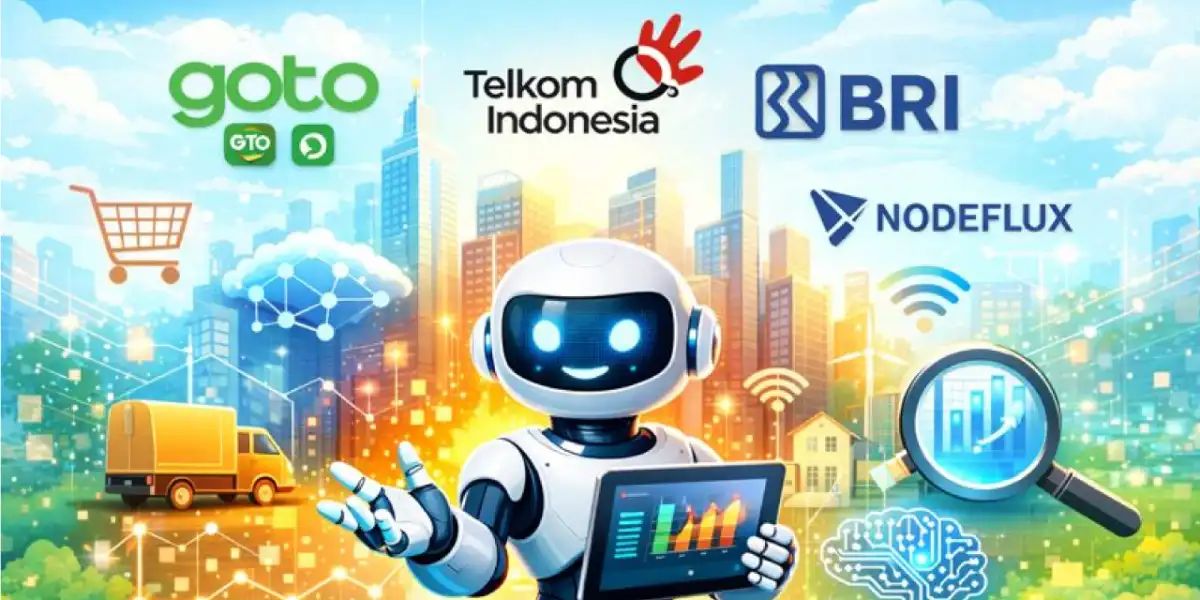
GoTo demonstrates one of the strongest examples of AI success in Indonesia through Sahabat-AI, a large language model (LLM) designed specifically for Bahasa Indonesia and local contexts.
Rather than relying on global AI solutions, GoTo built an AI that understands how Indonesians communicate—including informal language and regional variations.
Key Use Cases:
Language model for customer service
Foundation for local developer applications
Support for education, research, and public services
Insight:
Localization is not optional—it’s essential for AI adoption in Indonesia.
Telkom Indonesia, the country’s largest telecom operator, leverages AI to manage vast amounts of data. AI helps with automation, analysis, prediction, and operational efficiency.
Key Use Cases:
Big data analytics for network operations
AI-assisted mapping of regulations and complex documents
Optimization of digital services and customer experience
Telkom also collaborates with global partners to strengthen AI capabilities, showing that strategic partnerships accelerate innovation.
Insight:
AI succeeds when integrated into core workflows, not as a side project.
In banking, Bank Rakyat Indonesia (BRI) utilizes AI through chatbots to provide fast and consistent financial information to customers.
Key Use Cases:
24/7 customer service chatbot
Product and financial information delivery
Expanding financial access to wider communities
Insight:
AI doesn’t always have to be revolutionary—sometimes it’s about speed, accessibility, and reliability.
Indonesia’s e-commerce platforms use AI to:
Recommend products
Personalize user experiences
Detect fraud
Optimize logistics
While invisible to many users, AI significantly enhances conversion, efficiency, and customer satisfaction.
Insight:
AI works best when user experience feels seamless.
AI success in Indonesia isn’t limited to big corporations. Startups like Nodeflux show that local AI technology can compete globally.
Key Use Cases:
Computer vision for smart cities
Traffic monitoring and public safety analytics
AI-based video processing
Nodeflux proves Indonesia is not only a consumer of AI but also a creator of scalable, high-tech AI solutions.
Across these examples, clear patterns emerge:
✔️ Successful AI projects start with real business problems
✔️ Local context and language matter
✔️ AI complements humans rather than replaces them
✔️ Implementation is incremental, not “all at once”
In short, AI success in Indonesia depends on preparation, strategy, and execution, not speed alone.
Studying AI failures is important—so we don’t repeat mistakes. But stopping there breeds pessimism.
The facts are clear: AI is already succeeding in Indonesia, across major corporations and local startups. The challenge lies not in the technology, but in the readiness of strategy, data, and people behind it.
AI is not a magic solution. But in the right hands, it’s a real competitive advantage—and Indonesia is already proving it.


Recommended for you
AI Usage in Indonesia: What the Data Reveals About Adoption, Usage Patterns, and Integration Readiness
The Best Power-Ups and Boosters in Ducky Pop: When and How to Use Them
The Hydrogen Fuel Frontier: Aryanto Misel's Nikuba Tech Shakes the World
The Psychology Behind Match-3 Games: Why Ducky Pop is So Addictive
Feeding the Future: Tackling Global Food Security with AI Agriculture
Ducky Pop: A Splash in the Match-3 Pool
From Idea to Launch: A Step-by-Step Guide to Building Your Dream Startup
The Digital Revolution: How Mobile Apps Have Transformed Our Daily Lives
Ducky Pop: A Splash in the Match-3 Pool
Unlock the Hidden Worlds: Exploring the Different Themes and Levels in Ducky Pop
Tonework: The Future of Personalized Beauty is Here
Typography Tips That Wow: How to Use Fonts Like a Pro
The Future of Website Design: AI-Driven Tools Transforming User Experience
The Power of Data Analytics: How to Drive Growth with Informed Decisions
From Zero to Branded Hero: How Print-on-Demand Empowers Small Businesses