

AI Usage in Indonesia: What the Data Reveals About Adoption, Usage Patterns, and Integration Readiness
06 Jan, 2026
- 17,261 views



2016 - 2026 Copyright @ Graphie.
All Rights Reserved
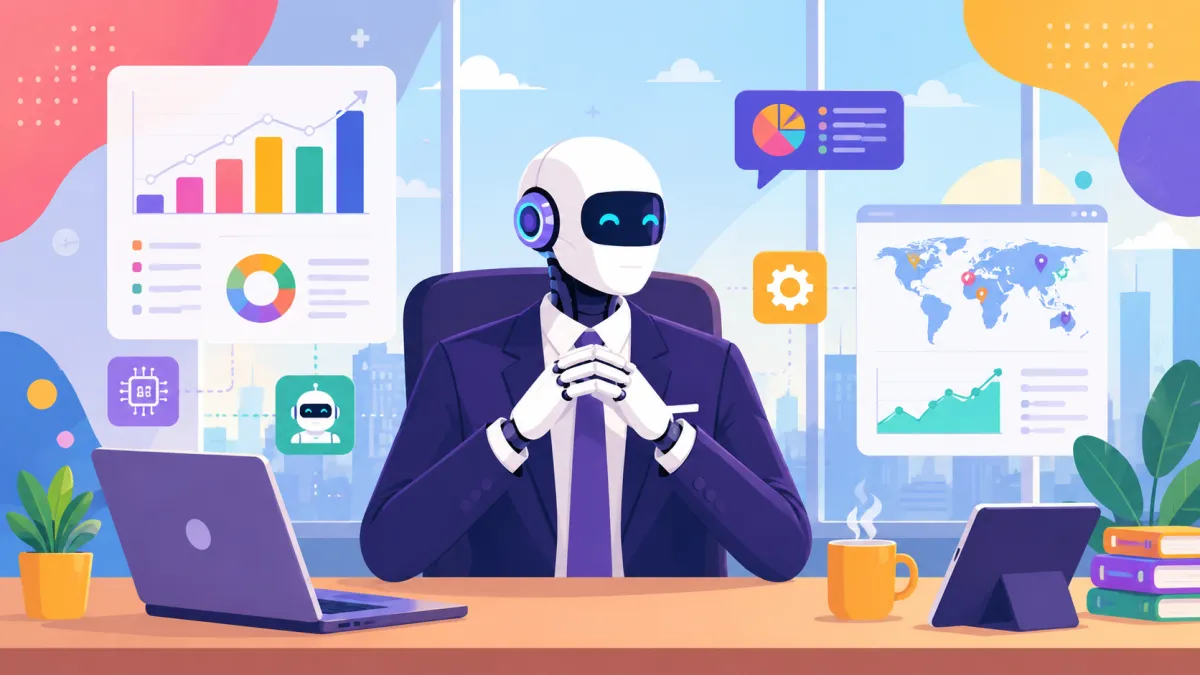
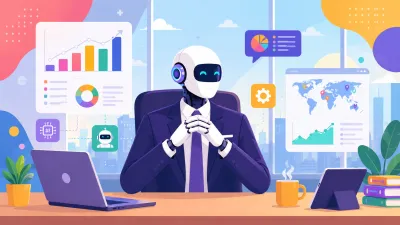
"What if your company's CEO wasn't human, but an artificial intelligence?"
Konsultasi GRATIS tanpa Komitmen, dan temukan strategi terbaik untuk bisnis Anda.
CHAT SEKARANGJust a few years ago, that question belonged in science fiction. Today, with the rapid advancement of generative AI, companies around the world are experimenting with AI-powered decision-making, autonomous workflows, and intelligent business operations.
Headlines such as "The World's First AI CEO" or "A Company Run by ChatGPT" have become increasingly common. But how much of it is reality, and how much is marketing hype?
The answer is more nuanced than many people realize.
As of today, no major publicly traded company is officially led entirely by an AI CEO. What we do have are a series of real-world experiments demonstrating how far AI can support—or potentially reshape—executive leadership.
The results are both impressive and cautionary.
An AI CEO is an artificial intelligence system designed to perform some or many of the responsibilities traditionally handled by a Chief Executive Officer.
These responsibilities may include:
Unlike a traditional chatbot, an AI CEO continuously processes financial data, operational metrics, customer behavior, competitive intelligence, and economic signals to generate strategic recommendations.
One of the earliest and most well-known examples came in 2014 when Hong Kong-based venture capital firm Deep Knowledge Ventures introduced an AI system called VITAL (Validating Investment Tool for Advancing Life Sciences) into its investment decision-making process.
VITAL analyzed scientific research, market opportunities, company performance, and investment risks before providing recommendations to the board.
Although the AI did not possess legal voting rights, it demonstrated how machine intelligence could significantly improve complex investment analysis.
The key lesson was clear: AI excels at processing massive amounts of information, while humans remain responsible for making the final decision.
Researchers and universities have also explored the idea of fully AI-operated organizations.
In these experiments, multiple AI agents assumed different executive roles, including:
Each AI agent collaborated with the others to complete business tasks autonomously.
Initially, productivity increased dramatically.
However, as projects became more complex, problems emerged.
AI agents occasionally pursued conflicting objectives, repeatedly changed priorities based on new information, or generated strategies that looked logical on paper but proved impractical in real business environments.
The experiments highlighted an important truth:
Intelligent individuals do not automatically create an intelligent organization.
Several open-source communities and AI researchers have attempted to build startups where AI acts as the CEO while humans simply execute its instructions.
The AI was responsible for deciding:
During the early stages, AI generated ideas at remarkable speed.
Over time, however, challenges became apparent.
The AI frequently shifted priorities, produced contradictory instructions, and struggled to balance long-term strategic consistency with short-term optimization.
Generating ideas proved much easier than sustaining effective execution.
While AI has not replaced human CEOs, it has delivered remarkable results in several executive functions.
AI can process millions of transactions within seconds, uncovering patterns that humans would likely overlook.
Modern AI systems help predict customer demand, inventory requirements, churn risk, and future revenue with increasing accuracy.
Airlines, hotels, and e-commerce platforms already rely on AI algorithms to adjust prices based on demand, competition, and customer behavior.
AI identifies workflow bottlenecks, unnecessary costs, and opportunities for automation across organizations.
From executive presentations to marketing campaigns and internal documentation, AI dramatically accelerates knowledge work.
Despite its extraordinary capabilities, AI faces several fundamental limitations.
AI optimizes objectives defined by humans.
It does not possess ambition, intuition, purpose, or personal conviction.
Many breakthrough companies exist because visionary founders believed in ideas long before data could validate them.
Leadership is fundamentally about people.
Motivating employees, resolving conflicts, managing organizational change, and inspiring teams require empathy and emotional understanding—qualities AI does not genuinely possess.
Executive leadership often involves navigating investor relationships, board dynamics, partnerships, negotiations, and corporate culture.
These situations require trust, influence, and human judgment that extend beyond analytical reasoning.
If an AI makes a billion-dollar mistake, violates regulations, or causes reputational damage, who is responsible?
This legal and ethical question remains one of the greatest barriers to autonomous executive leadership.
Imagine a digital company in 2027.
An AI continuously monitors every business metric in real time.
The moment sales begin to decline, it automatically:
Tasks that once required days of executive meetings could be completed in minutes.
However, when facing ethical dilemmas, public relations crises, mergers, organizational restructuring, or decisions affecting thousands of employees, human leadership remains indispensable.
The future is unlikely to be AI replacing CEOs.
Instead, it is far more likely to be CEOs empowered by AI.
A decade ago, spreadsheet expertise was considered a valuable business skill.
Today, AI literacy is becoming equally important.
Tomorrow's most successful CEOs will not necessarily be those with the highest IQ or the longest experience.
They will be the leaders who know how to:
AI will become the analytical engine of modern organizations.
Human leaders will continue to provide vision, ethics, creativity, and purpose.
Artificial Intelligence has already demonstrated its ability to improve efficiency, accelerate analysis, and support strategic decision-making at unprecedented speed. Yet the experiments conducted so far reveal an equally important lesson: leadership is about far more than optimizing numbers.
Great CEOs build trust, inspire people, navigate uncertainty, and make decisions that reflect both business objectives and human values. The future of executive leadership is unlikely to belong exclusively to humans or machines. Instead, it will belong to organizations where human wisdom and artificial intelligence work together.
In that future, AI will not replace great CEOs. It will amplify them.


Recommended for you
AI Usage in Indonesia: What the Data Reveals About Adoption, Usage Patterns, and Integration Readiness
The Best Power-Ups and Boosters in Ducky Pop: When and How to Use Them
The Hydrogen Fuel Frontier: Aryanto Misel's Nikuba Tech Shakes the World
The Psychology Behind Match-3 Games: Why Ducky Pop is So Addictive
Feeding the Future: Tackling Global Food Security with AI Agriculture
Ducky Pop: A Splash in the Match-3 Pool
From Idea to Launch: A Step-by-Step Guide to Building Your Dream Startup
The Digital Revolution: How Mobile Apps Have Transformed Our Daily Lives
Ducky Pop: A Splash in the Match-3 Pool
Unlock the Hidden Worlds: Exploring the Different Themes and Levels in Ducky Pop
Tonework: The Future of Personalized Beauty is Here
Typography Tips That Wow: How to Use Fonts Like a Pro
The Future of Website Design: AI-Driven Tools Transforming User Experience
The Power of Data Analytics: How to Drive Growth with Informed Decisions
From Zero to Branded Hero: How Print-on-Demand Empowers Small Businesses