


AI Usage in Indonesia: What the Data Reveals About Adoption, Usage Patterns, and Integration Readiness
06 Jan, 2026
- 18,562 views


2016 - 2026 Copyright @ Graphie.
All Rights Reserved

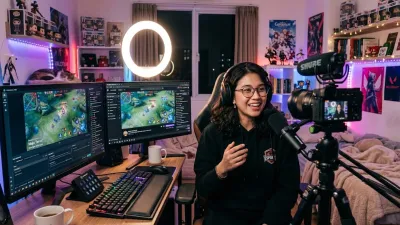
Becoming a content creator may look simple from the outside. Make a video, upload it to social media, gain followers, and eventually make money. In reality, content creation requires creativity, consistency, communication skills, audience understanding, storytelling, and increasingly, business and digital skills.
The good news is that you do not need to be famous, own an expensive camera, or have millions of followers to get started. Many successful creators started with nothing more than a smartphone, a simple idea, and the courage to publish their first piece of content.
Before jumping into content creation, however, there are several things you should understand. The goal is not simply to become someone who posts regularly, but to build an audience, a personal brand, and potentially a sustainable career or business.
A content creator is someone who creates and distributes content for an audience through digital platforms.
That content can take many forms:
Platforms can include TikTok, Instagram, YouTube, Facebook, LinkedIn, X, blogs, podcast platforms, newsletters, and online communities.
In other words, being a content creator is not simply about making videos. A successful creator is often a combination of a creator, communicator, marketer, and storyteller.
Technically, almost anyone can.
You do not need a specific degree or professional media background. You also do not have to be extremely extroverted or naturally charismatic.
What matters more is having something valuable, interesting, entertaining, or useful to share.
That could be:
You do not always have to position yourself as an expert.
You can also document what you are learning and invite people to follow the journey.
Before thinking about cameras, editing software, or follower counts, ask yourself:
"Why do I want to become a content creator?"
Your answer will influence how you approach the entire journey.
1. Building a Personal Brand
Content can help you become known for a particular skill, subject, or perspective. For example, someone who consistently creates content about digital marketing can gradually build a reputation as a digital marketing specialist.
2. Making Money
Content creators can generate income through brand collaborations, affiliate marketing, advertising, sponsorships, memberships, digital products, courses, and professional services.
3. Supporting a Business
Content creation can be a powerful marketing tool for business owners. It can help generate awareness, build trust, attract leads, educate customers, and drive sales.
4. Sharing Knowledge
Your experience may be valuable to someone else. Tutorials, educational content, practical tips, and real-life experiences can provide significant value to an audience.
5. Expressing Creativity
For some people, content creation is primarily a creative outlet involving video, photography, design, writing, music, or storytelling. Having a clear reason for starting will help you stay motivated when your views are low or your growth is slower than expected.
One of the biggest mistakes beginners make is trying to talk about everything.
Today they talk about technology. Tomorrow they post cooking content. The next day they discuss relationships, then finance, then travel.
Having multiple interests is perfectly fine. However, your audience needs a reason to follow you.
Start by identifying a content niche.
Possible niches include:
Your niche does not have to be extremely narrow.
You can have a main niche supported by several related subtopics.
For example:
Main niche: Digital Technology
Subtopics: AI, productivity tools, cybersecurity, software, and digital trends.
This gives you room to create different types of content while maintaining a clear overall identity.
Choosing a topic is only half of the equation. You also need to know who you are talking to. For example, "AI" is an extremely broad topic. You could create AI content for:
AI content for programmers will obviously be very different from AI content for small business owners. The clearer your audience, the easier it becomes to determine your language, examples, content format, and communication style.
Not every platform is suitable for every type of content.
TikTok and Instagram Reels are highly suitable for short-form video. YouTube can support both short-form and long-form video. LinkedIn is particularly useful for professional content, business insights, career topics, and industry knowledge. Blogs are useful for longer, searchable, in-depth content.
You do not have to be active everywhere from day one. For beginners, it is often better to choose one primary platform first. Once you understand what works, you can adapt your content for other platforms.
One of the most common reasons people never start is:
"I don't have a good camera."
The reality is that modern smartphones are already capable of producing excellent content.
Konsultasi GRATIS tanpa Komitmen, dan temukan strategi terbaik untuk bisnis Anda.
CHAT SEKARANGTo get started, you may only need:
Audio quality can sometimes matter more than having an expensive camera. Do not spend thousands of dollars on equipment before you know whether you can consistently create content. Start with what you have. Upgrade when you understand what you actually need.
You do not need to become a professional filmmaker or editor immediately. However, there are several fundamental skills worth learning.
1. Storytelling
Good content does not simply provide information. Good content makes people want to keep watching, reading, or listening. A simple structure is:
Hook → Problem → Story/Information → Solution → CTA
For example:
"You may not need an expensive camera to become a content creator."
Then explain why, provide examples, and finish with a useful recommendation or call to action.
2. Copywriting
Copywriting helps you create:
Headlines.
Captions.
Hooks.
Calls to action.
Video scripts.
Post descriptions.
A single sentence at the beginning can determine whether someone continues consuming your content or scrolls away.
3. Video Editing
At a minimum, understand:
Cutting.
Transitions.
Subtitles.
Background music.
Sound effects.
Zooms.
Basic color adjustments.
Timing.
You do not need to master every editing technique. The goal is to make your content easy and enjoyable to consume.
4. Visual Design
Learn the basics of:
Typography.
Composition.
Color.
Visual hierarchy.
Branding.
Good thumbnails, covers, carousels, and visual posts can help your content stand out in crowded feeds.
5. Public Speaking
If you create videos featuring yourself, communication skills become extremely valuable. You do not need to sound like a television presenter. Focus on being:
Clear.
Natural.
Confident.
Engaging.
Attention is one of the most valuable resources on social media. People can scroll past your content within seconds. That makes the beginning of your content extremely important. Examples of hooks:
Question:
"Why are you posting every day but still getting almost no views?"
Problem:
"If you're still making these three mistakes, don't be surprised by your low engagement."
Curiosity:
"There's one small mistake almost every beginner content creator makes."
Result-oriented:
"Here's how to generate 10 content ideas in just 15 minutes."
A hook does not have to be clickbait. Its job is to make the audience feel: "This is relevant to me."
Content pillars are the main categories that form the foundation of your content strategy. For example, if you are a business creator:
Pillar 1 — Education
Business and marketing tips.
Pillar 2 — Experience
Stories and lessons from building a business.
Pillar 3 — Opinion
Your perspective on business trends.
Pillar 4 — Behind the Scenes
What happens behind your business.
Pillar 5 — Promotion
Your products or services.
Content pillars make it easier to generate ideas while keeping your brand consistent.
Going viral feels great. But virality is not the only measure of success. A video with one million views may generate zero customers. Meanwhile, a video with 10,000 views could potentially generate highly relevant leads. Define what you actually want your content to achieve. Is your goal:
Views are numbers. Business impact is an outcome.
Many beginners spend too much time trying to make one piece of content perfect. They search for the perfect camera, write the perfect script, spend hours editing, and eventually never publish anything. It is often better to create something good enough, publish it, learn from the results, and improve the next one. A useful cycle is:
Create → Publish → Analyze → Improve → Repeat.
The more content you create, the more data you collect about what your audience actually likes.
If your platform provides analytics, use them. Do not look only at views. Pay attention to:
Analytics can help answer one important question: "What type of content does my audience actually respond to?" Do not rely entirely on intuition. Use data to improve your content strategy.
Personal branding is the perception people develop when they see your name, content, or work.
Ask yourself:
"What do I want people to associate with my name?"
For example:
"The person who explains AI in simple terms for business owners."
Or:
"The creator who talks about work and career realities without sugar-coating them."
A personal brand is not built overnight.
It develops through consistent messaging, topics, visual identity, personality, and perspective.
One of the biggest traps in content creation is copying successful creators too closely. Studying successful creators is useful. Learning from their structure, hooks, editing, and storytelling is perfectly reasonable. But do not lose your own identity.
People do not only follow information. They follow the person behind the information. Your personality, experiences, humor, opinions, and perspective are difficult for someone else to replicate.
As your audience grows, negative comments are almost inevitable. Some people will disagree with you. Some will misunderstand you. Some may simply want to provoke you. Learn to distinguish between: Constructive criticism and random negativity.
Not every comment deserves a response. And not everyone needs to like you.
This is an area many beginners overlook. Do not casually use:
Understand licensing and usage rights. Use material that you own, have permission to use, or that is appropriately licensed. Simply giving credit to the original creator does not automatically give you permission to use their work.
AI can become a powerful assistant for content creation.
You can use AI for:
However, do not let AI replace your creativity completely.
Content that feels generic, overly polished, or entirely machine-generated can lose its human character.
Use AI as a copilot, not a replacement for your identity and experience.
Being a content creator does not have to end with gaining followers.
There are many potential monetization models.
1. Brand Collaborations
Brands pay creators to produce content or promote products.
2. Affiliate Marketing
You earn a commission when your audience purchases products through your referral link or code.
3. Advertising Revenue
Some platforms allow eligible creators to earn revenue from advertising under their respective programs and requirements.
4. Selling Products
You can sell:
Merchandise.
Ebooks.
Templates.
Courses.
Software.
Physical products.
Digital products.
5. Selling Services
A strong personal brand can become a source of leads for services such as:
Design.
Consulting.
Coaching.
Photography.
Marketing.
Writing.
Development.
Memberships and Communities
Creators with strong communities can offer memberships, exclusive content, or paid communities. The important thing to understand is: Followers are not a business. Followers are an audience. A business exists when that audience has a reason to buy, subscribe, or use something you offer.
Buying followers may make your profile look bigger.
But fake followers do not automatically become an active audience.
This can result in:
It is better to have 5,000 followers who genuinely care about your content than 100,000 followers who never interact with it.
You do not need an overly complicated content calendar.
Simply track:
For example:
Monday: Tips
Wednesday: Tutorial
Friday: Opinion
Sunday: Behind the scenes
A simple system prevents you from asking yourself every morning:
"What should I post today?"
Productive creators usually do not start from zero every single day.
Build a system.
For example:
Day 1: Research and ideas.
Day 2: Scripts.
Day 3: Shooting.
Day 4: Editing.
Day 5: Publishing and analytics.
You can also use batch content production.
Instead of recording one video every day, record five or ten videos during one session.
This can dramatically improve efficiency.
One idea does not have to produce only one piece of content.
A single YouTube video could become:
This allows one idea to take multiple forms.
Create once, distribute many times.
There is no universal answer.
Some creators grow quickly. Others take years.
Do not turn someone else's success story into your personal deadline.
Focus on what you can control:
Content creation is much more like a marathon than a sprint.
Here are some mistakes worth avoiding:
1. Waiting for perfect equipment.
Start with what you have.
2. Focusing too much on followers.
Pay attention to audience quality and engagement.
3. Having no clear niche.
People may not understand why they should follow you.
4. Chasing virality.
Viral content does not always create value or revenue.
5. Copying other creators too much.
Learn from them without losing your identity.
6. Being inconsistent.
Posting every day for one week and disappearing for a month makes growth difficult.
7. Ignoring analytics.
You lose valuable information about audience behavior.
8. Being afraid of criticism.
Not everyone will like your content.
9. Creating without a purpose.
Every piece of content should serve a function.
10. Giving up too quickly.
Your first content may not be good. That is normal.
Before you start, make sure you have a basic understanding of:
| Why you want to become a content creator |
| Your niche or main topic. |
| Target audience. |
| Primary platform |
| Content pillars. |
| Communication style. |
| Content format |
| Basic Equipment |
| Basic editing skills |
| Storytelling skills |
| Content calendar. |
| Production workflow |
| Distribution strategy |
| How to read analytics. |
| Your personal branding strategy. |
| Your monetization strategy. |
| Basic copyright knowledge. |
| How you will deal with negative feedback. |
| Your commitment to consistency. |
If you have something you want to share, the answer may be yes.
But don't think of content creation simply as the job of making social media posts.
Content creation is the ability to capture attention, communicate ideas, build trust, and create relationships with an audience.
You do not need millions of followers to begin.
You do not need an expensive camera.
You do not need a professional studio.
You need an idea, a smartphone, the courage to start, and the willingness to keep learning.
Your first piece of content may be terrible.
Your first video may only be watched by a handful of people.
Your first post may receive almost no engagement.
That's okay.
Because the purpose of your first piece of content is not to go viral.
The purpose of your first piece of content is to start.
Then create the second.
Then the third.
Study the data.
Improve the quality.
Build the audience.
And gradually, turn content creation into a personal brand, career, community, or even a business.





Recommended for you
AI Usage in Indonesia: What the Data Reveals About Adoption, Usage Patterns, and Integration Readiness
The Best Power-Ups and Boosters in Ducky Pop: When and How to Use Them
The Hydrogen Fuel Frontier: Aryanto Misel's Nikuba Tech Shakes the World
The Psychology Behind Match-3 Games: Why Ducky Pop is So Addictive
Feeding the Future: Tackling Global Food Security with AI Agriculture
Ducky Pop: A Splash in the Match-3 Pool
From Idea to Launch: A Step-by-Step Guide to Building Your Dream Startup
The Digital Revolution: How Mobile Apps Have Transformed Our Daily Lives
Ducky Pop: A Splash in the Match-3 Pool
Unlock the Hidden Worlds: Exploring the Different Themes and Levels in Ducky Pop
Tonework: The Future of Personalized Beauty is Here
Typography Tips That Wow: How to Use Fonts Like a Pro
The Future of Website Design: AI-Driven Tools Transforming User Experience
The Power of Data Analytics: How to Drive Growth with Informed Decisions
From Zero to Branded Hero: How Print-on-Demand Empowers Small Businesses